Advanced Sensing | Wearable Technology | Research & Development
High-Sensitivity Tremor & Micro-Motion Sensing
Detecting movements that conventional sensing technology can struggle to resolve.
Some of the smallest movements can carry the most valuable information.
Whether examining subtle hand tremors, changes in movement patterns or extremely fine mechanical vibrations, capturing these signals accurately presents a significant engineering challenge.
AVO Invents is developing a proprietary high-sensitivity movement-sensing technology intended to explore a new level of detail in the measurement and analysis of small-scale motion.
Our research has already produced encouraging results, opening the possibility of developing compact sensing systems for wearable technology, scientific research and specialist engineering applications.
Beyond Conventional Motion Sensing
Most wearable motion-monitoring devices rely on inertial measurement units (IMUs), typically incorporating accelerometers and gyroscopes.
These devices have become an established solution for measuring movement, acceleration and angular rotation.
However, detecting exceptionally small or low-amplitude movements can present difficulties, particularly where the signal of interest is close to background noise or is masked by other motion.
AVO Invents has been investigating a different sensing architecture designed to explore these limitations.
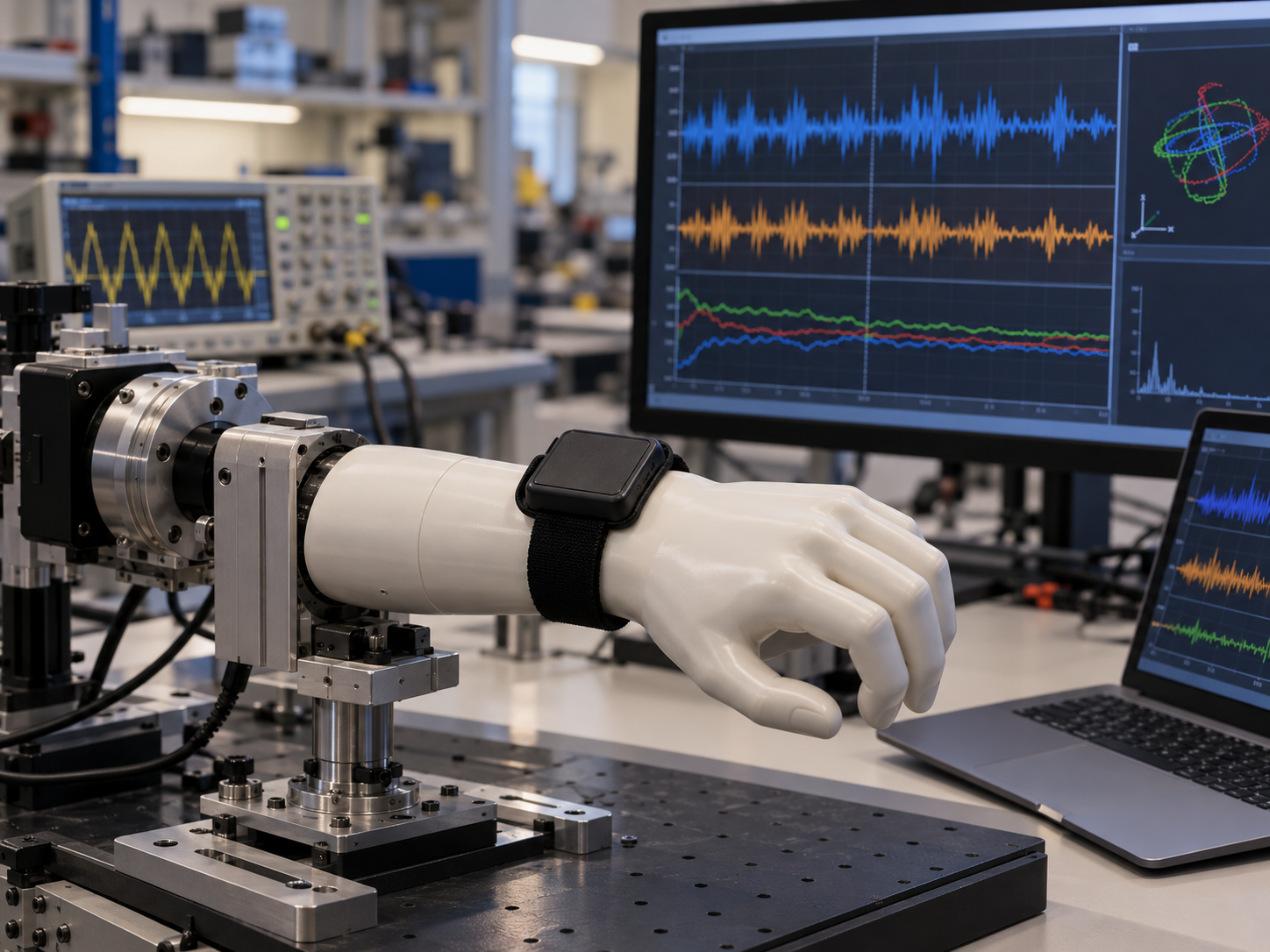
During early comparative experiments, our experimental system detected fine movement signatures that were not clearly distinguishable in the conventional accelerometer and gyroscope measurements collected from the same test apparatus.
These observations have encouraged further development into the technology's sensitivity, repeatability and potential to resolve increasingly small displacements.
Understanding Tremors and Subtle Movement
Tremors are not simply movements of the hand from one position to another. They can involve complex combinations of oscillation, changing amplitude, frequency and direction.
Understanding these characteristics requires more than detecting whether movement is present.
Our research is exploring the ability to capture and analyse:
- Very small movements and vibrations.
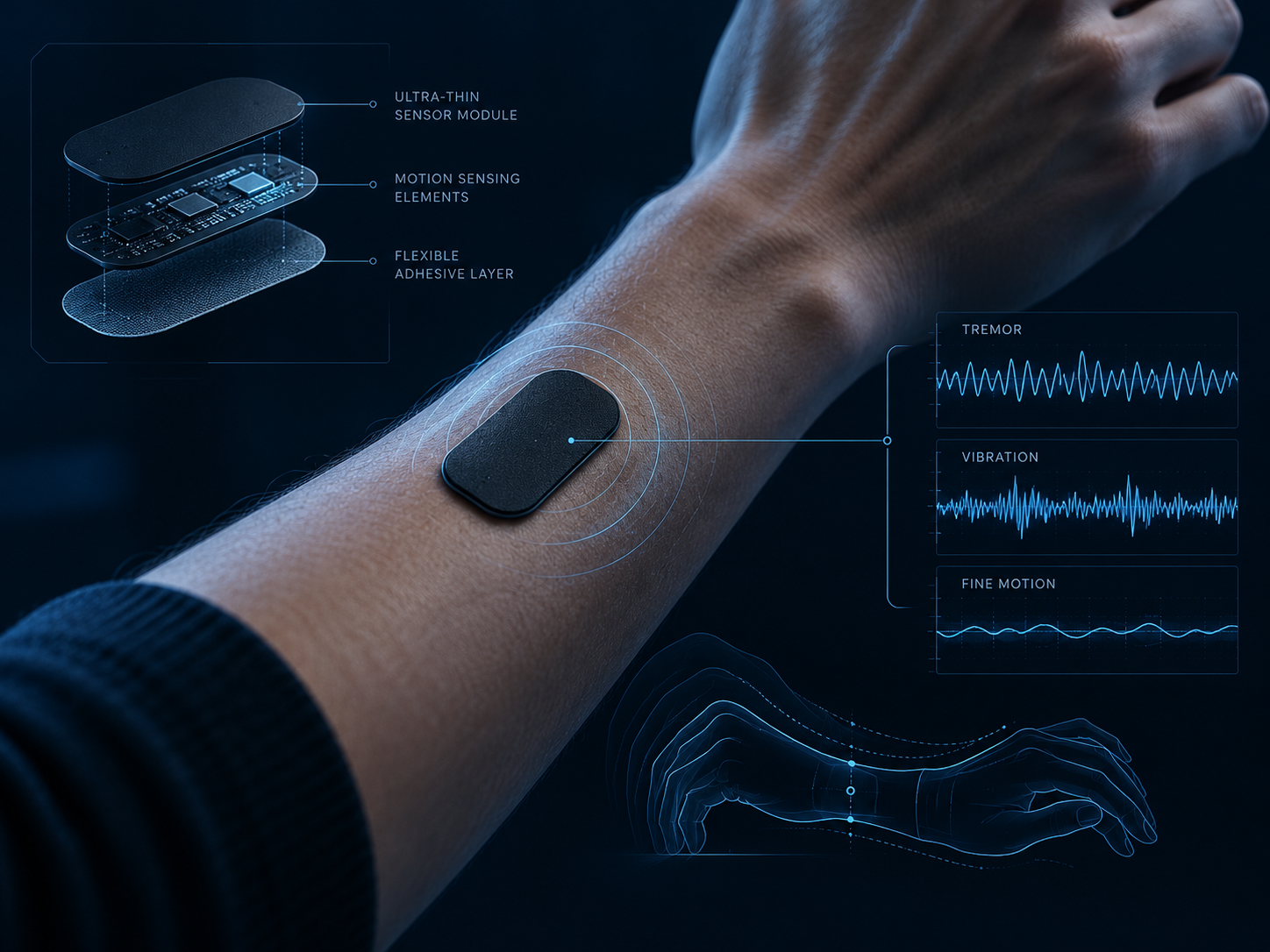
- Tremor frequency and changes in oscillation patterns.
- Variations in movement amplitude over time.
- Subtle motion that may be difficult to distinguish using conventional sensing arrangements.
- Complex movement signatures that could provide additional information about how motion develops or changes.
By investigating these characteristics, we are working towards a system capable of providing a more detailed representation of fine movement.
Wearable Monitoring Opportunities
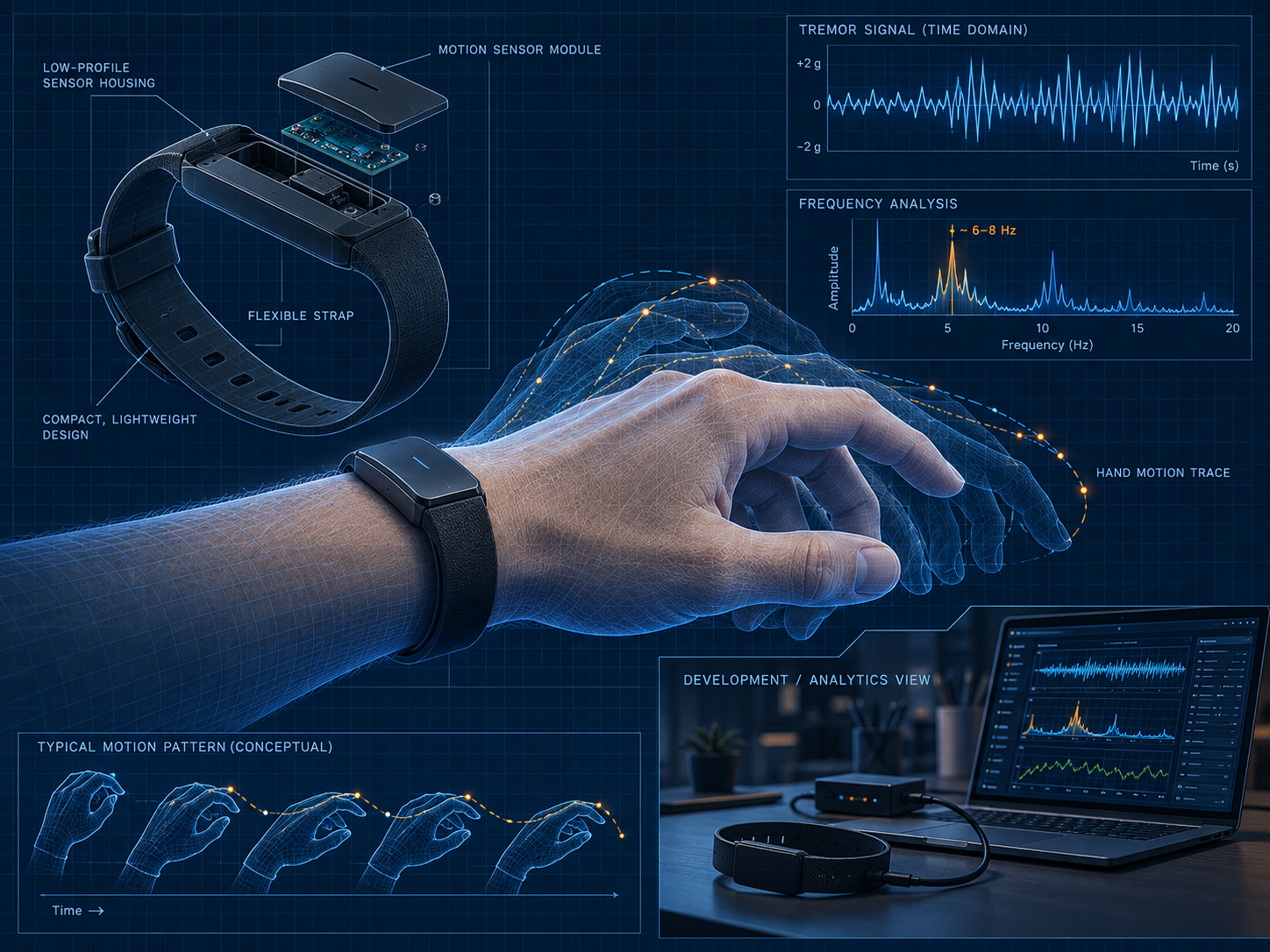
One potential application is the development of compact wearable devices for monitoring tremors and other involuntary movements.
A wrist-worn device could offer a convenient method of observing hand and arm movement over extended periods, allowing changes in movement patterns to be recorded and analysed.
However, we do not see wrist-worn technology as the only possibility.
The sensing system could potentially be developed into a lightweight adhesive patch or other compact wearable format, allowing it to be positioned on different areas of the body depending on the movement being investigated.
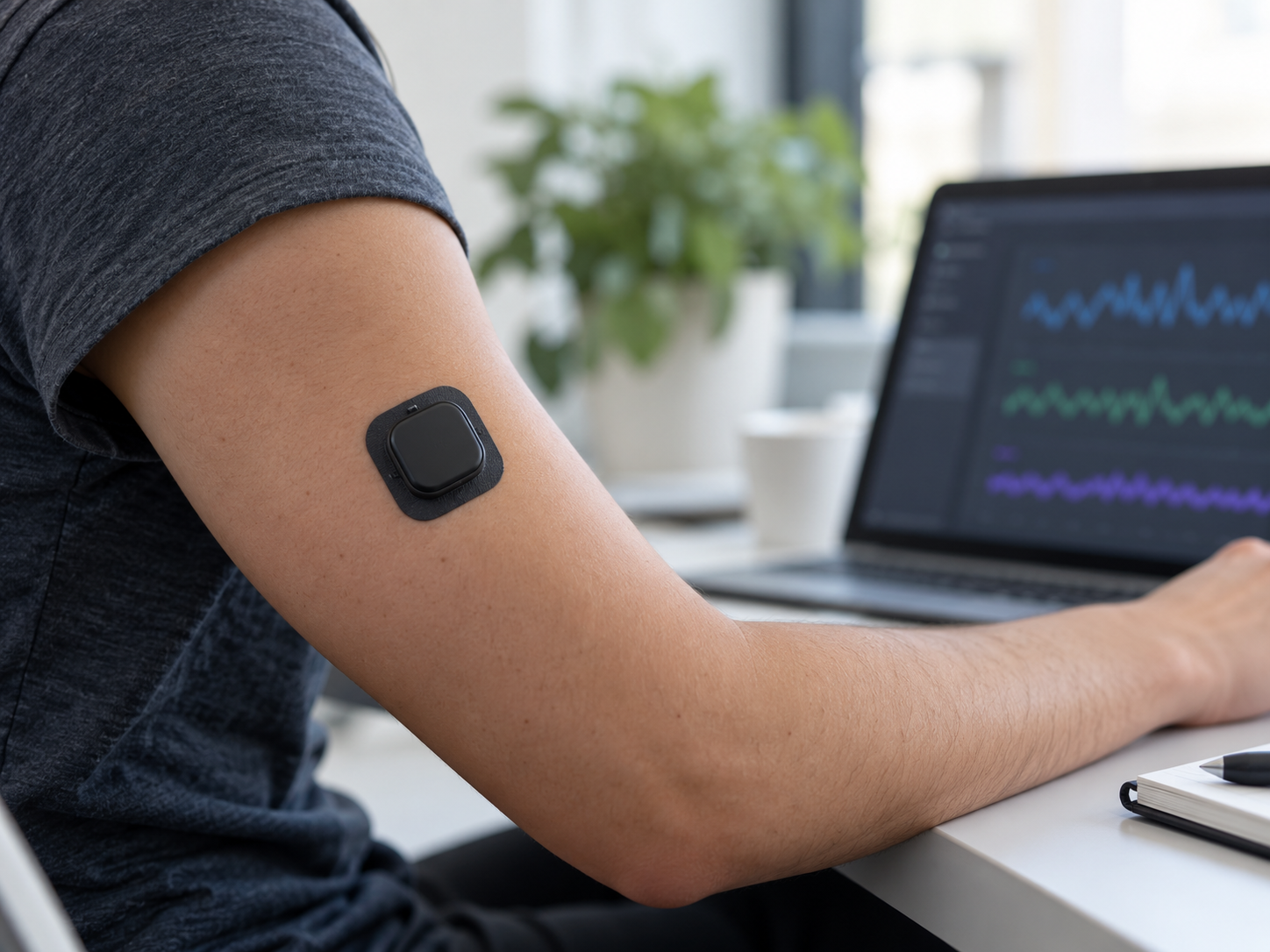
This flexibility could open opportunities for research into tremors affecting the hands, arms and other parts of the body.


Neurological and Movement Research
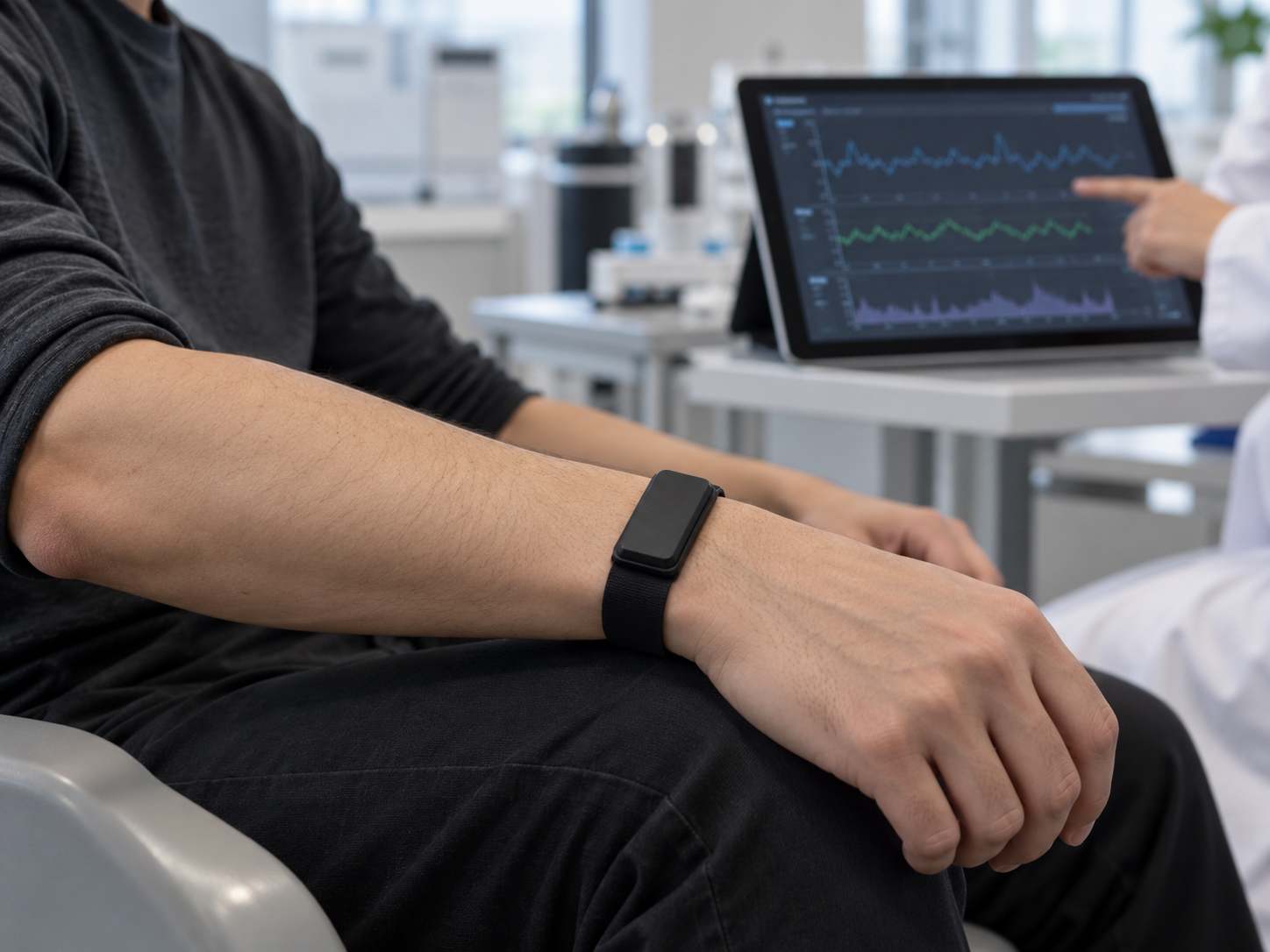
An area of particular interest is the potential application of this technology to movement-disorder research, including the investigation of tremors associated with conditions such as Parkinson's disease.
The ability to capture fine movement characteristics could be valuable to researchers examining how tremors change over time, how different movement patterns compare and how subtle variations can be identified.
Our interest extends beyond identifying the presence of a tremor.
We want to investigate how much additional information can be extracted from small movements and whether alternative sensing approaches could provide useful insights alongside established measurement technologies.
Developing the Limits of Sensitivity
A significant part of the ongoing research involves understanding just how small a movement our sensing technology can reliably detect.
Initial experiments have produced encouraging results, particularly when compared with conventional inertial measurements under equivalent test conditions.
We are now extending this work into more precise displacement characterisation, with the objective of establishing the technology's practical sensitivity and performance across different movement conditions.
This research is also informing our investigation of compact hardware configurations suitable for future wearable applications.
The sensing architecture and underlying technical methods remain proprietary.
Potential Beyond Wearable Technology
Although tremor monitoring is a compelling application, we believe the underlying technology has opportunities in other sectors where the measurement of small movements is important.
Potential areas of investigation include:
- Precision vibration monitoring.
- Mechanical and structural movement analysis.
- Research instrumentation.
- Human movement and biomechanics.
- Small-displacement measurement.
- Advanced industrial sensing.
The longer-term opportunity may extend beyond a single wearable product into a sensing platform adaptable to several applications.
Research and Collaboration
AVO Invents continues to undertake independent research into this technology, with particular interest in expanding experimental evaluation and exploring new applications.
We welcome discussions with universities, research institutions, medical technology developers, engineering companies and commercial partners interested in high-sensitivity movement measurement.
Our objective is to build on the results already achieved, further investigate the limits of the sensing technology and explore opportunities where it could offer meaningful advantages over existing approaches.
For research partnerships, technical discussions or commercial enquiries, please contact AVO Invents.