Intelligent Sensing
Contactless Fishing Bite Alarm
Working Prototype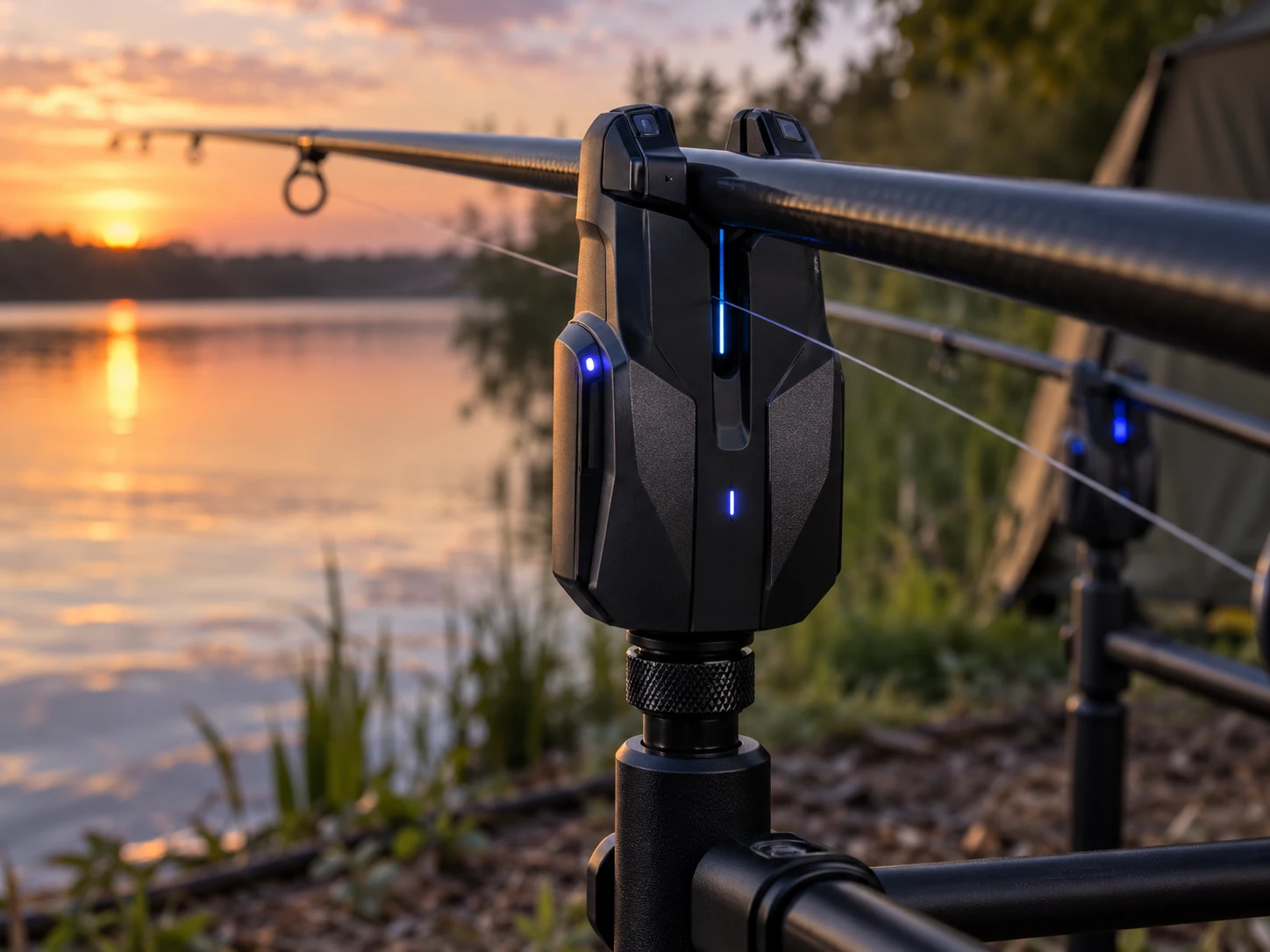
Rethinking how fishing bites are detected.
AVO Invents has developed a new approach to fishing bite detection, replacing traditional mechanical sensing methods with an innovative, contactless system.
Unlike conventional roller-based bite alarms, our technology detects fishing-line movement without requiring physical contact between the line and the sensing mechanism.
The fishing rod rests in the familiar V-shaped support, maintaining a conventional fishing setup while introducing a fundamentally different way of detecting activity on the line.
Detecting What Conventional Alarms Miss
Traditional bite alarms primarily respond to fishing-line movement sufficient to turn a mechanical roller.
Our technology can detect much smaller movements and subtle vibrations without relying on the line tension normally required to operate these mechanisms.
This creates opportunities to identify activity that conventional alarms may not register, potentially providing anglers with earlier and more detailed information about what is happening underwater.
Beyond Bite Detection
One of the more interesting discoveries during development has been the information contained within fishing-line vibrations.
Our research is exploring how these vibration signatures could help identify different underwater conditions, including the characteristics of the lakebed or riverbed where the fishing tackle has landed.
This remains an area of ongoing development, but demonstrates how the technology could offer substantially more information than conventional bite indication.
Intelligent, Connected Technology
The system combines custom electronics, embedded firmware, wireless communications and a dedicated smartphone application.
The companion application provides a modern interface for controlling and configuring the device, bringing advanced sensing together with practical functionality for anglers.
Development Status
A functioning prototype and companion mobile application have been developed.
Further testing and refinement are focused on improving performance, validating additional sensing capabilities and preparing the technology for potential commercial production.
The underlying sensing architecture remains commercially confidential.